 Virtual Colossus
Overview
The Schlüsselgerät 41 (SG-41) is a German World War II mechanical pin-wheel cipher machine, designed by Fritz Menzer in 1941 as a more secure successor to Enigma and made by Wanderer Werke, a typewriter manufacturer. It uses the pin-and-lug (pin-wheel) principle rather than classic wired rotors, and prints both plain text and cipher text on paper tapes instead of using lamps. Its compact, rugged, crank-driven design was intended for field use by the Abwehr and other units, though only around 1,000–1,500 were delivered before the end of the war.
Because of wartime shortages of lighter metals such as aluminium and magnesium, it ended up weighing about 13.5 kg (30 lb), which made it too heavy to carry any distance. That may well have contributed to how few were made.
How it was used
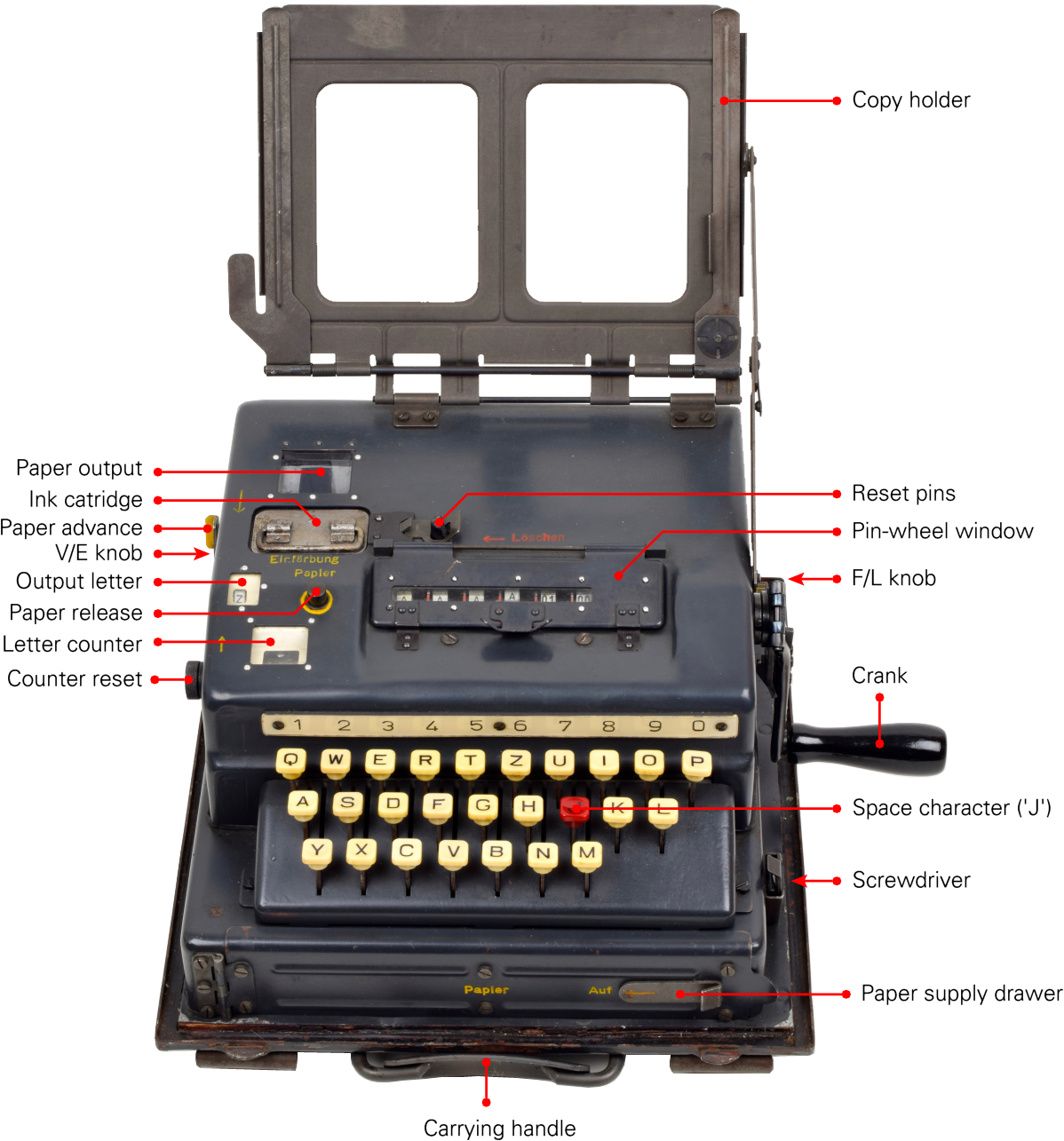
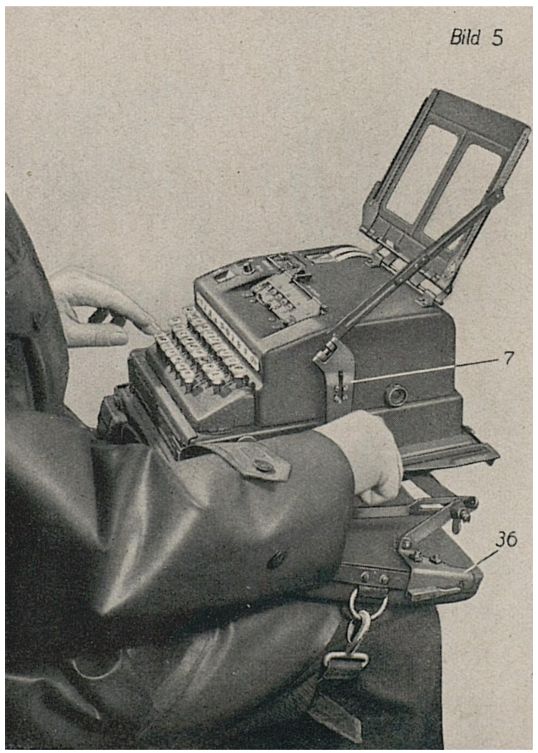
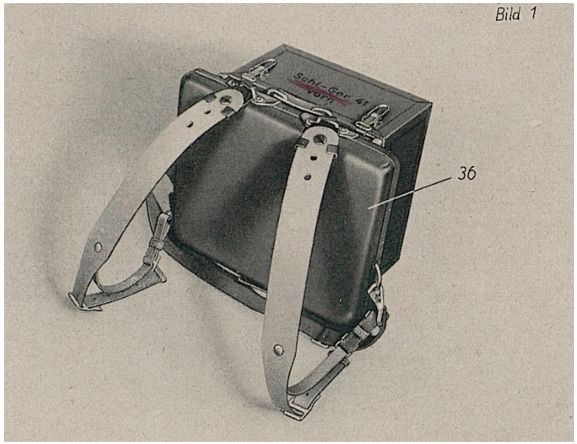
In use, the SG-41 was placed on a flat surface, with the operator facing the keyboard and the crank on the right. Alternatively, a thigh pad with straps was available for the “portable” version. The operator set the machine’s internal keying elements (the pin-wheels, lugs and starting positions), loaded the paper tapes and ink, and then pressed a key before turning the crank. Each full turn of the crank moves the mechanism on, works out a substitution and prints both the input character and the resulting output character on separate tapes, allowing immediate checking and leaving a permanent record. The machine works for both encryption and decryption, using the same key settings and the same sequence of operation.
The interior
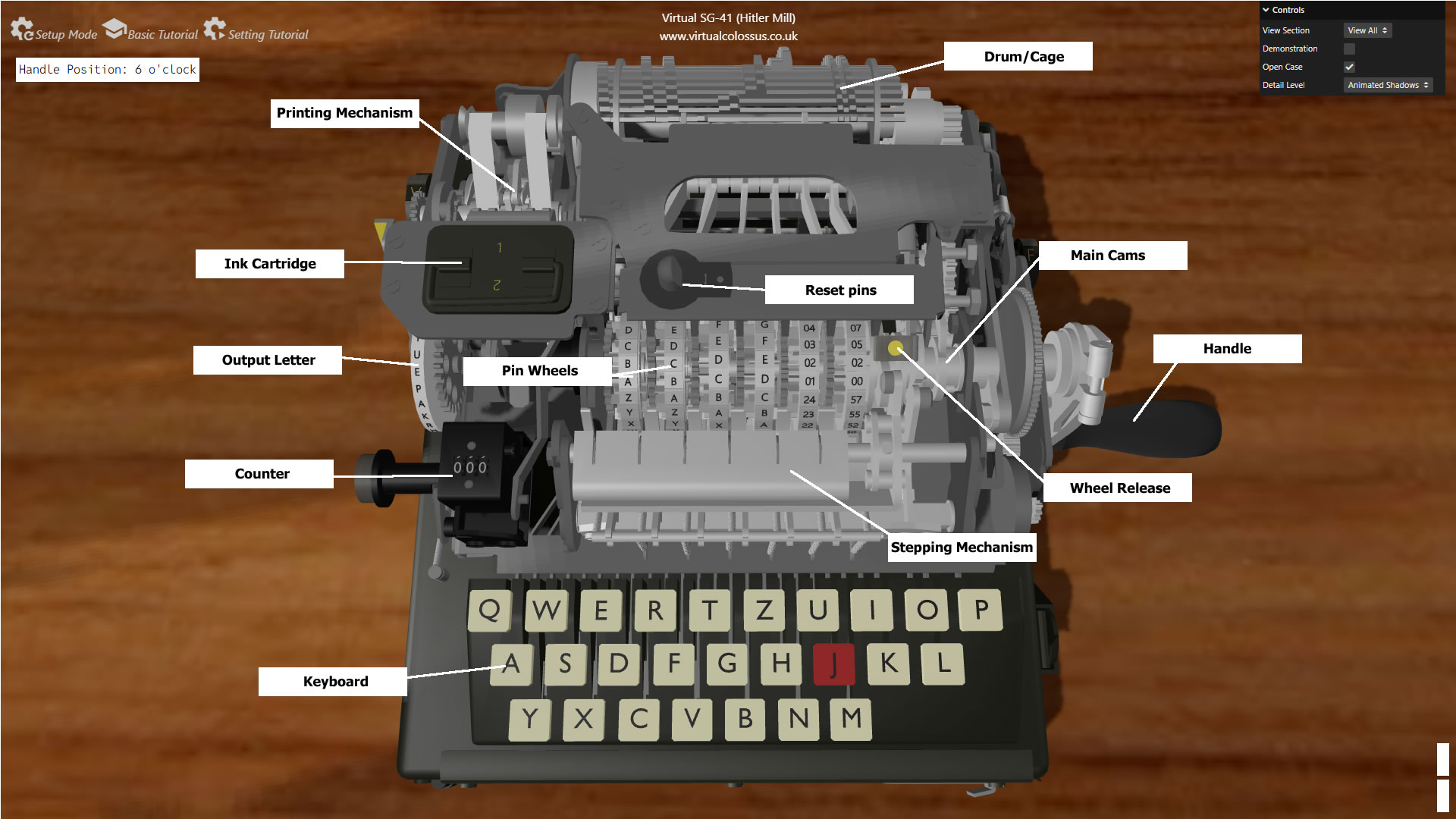
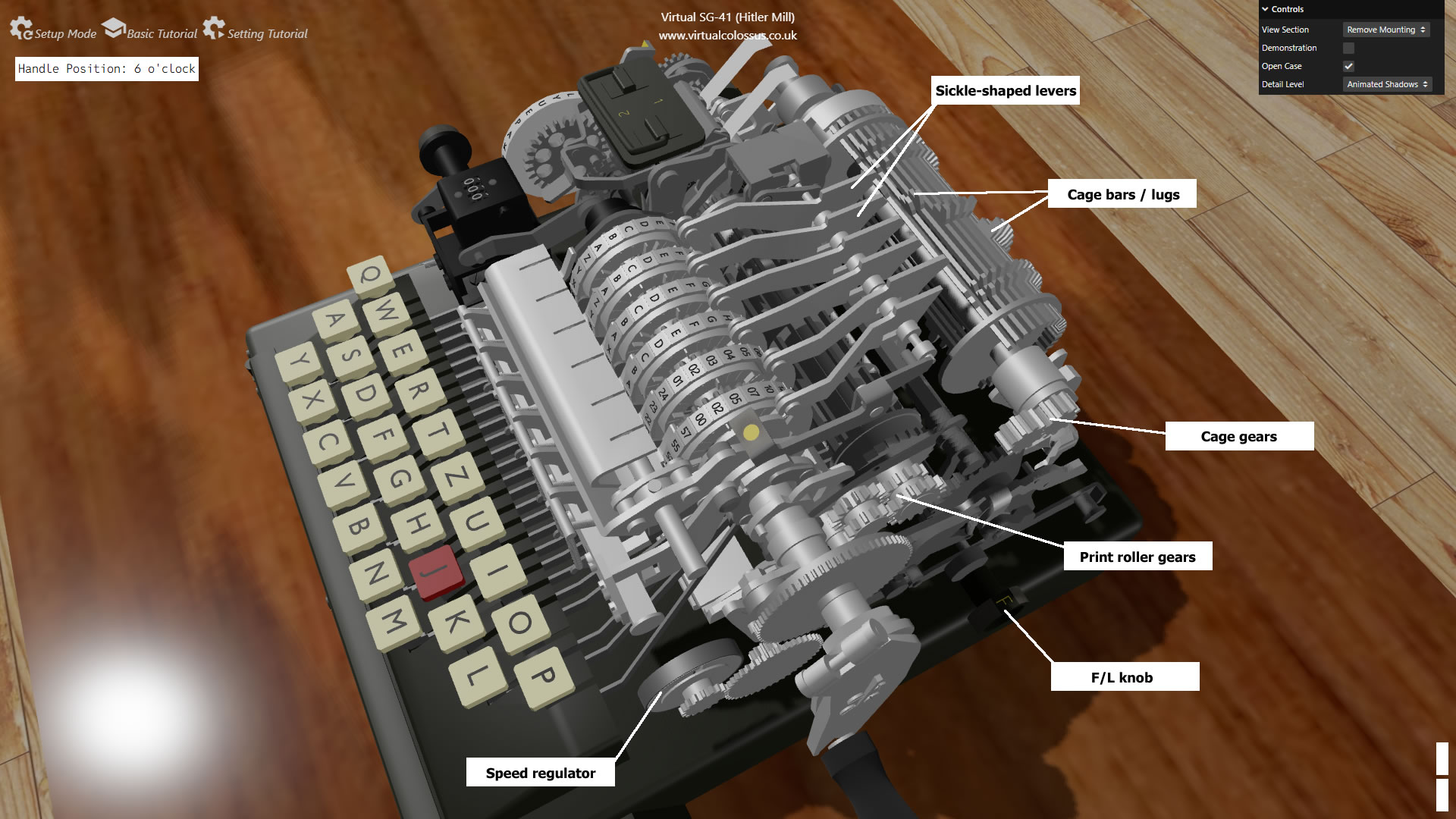
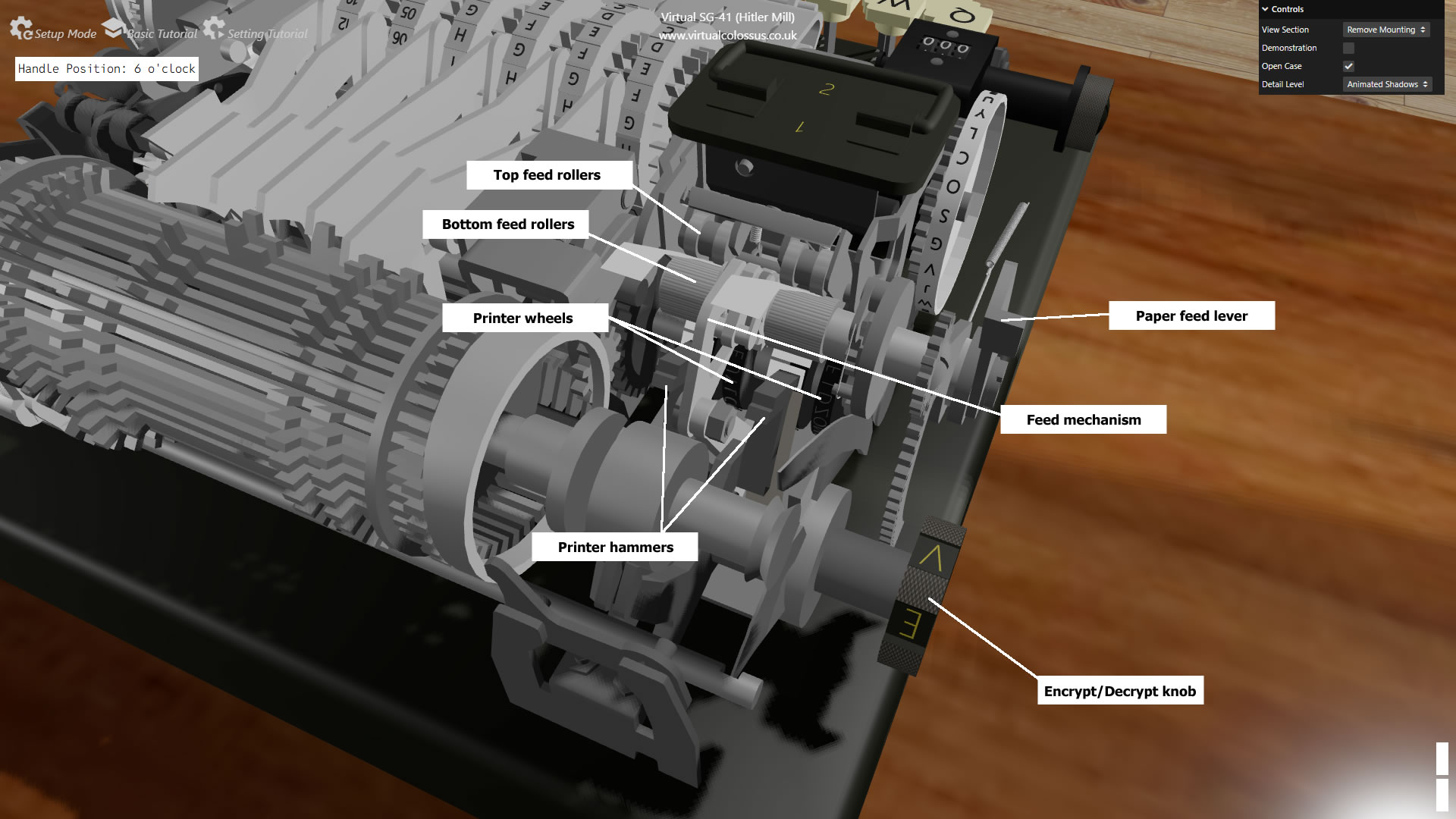
Inside, the SG-41 is densely packed with mechanical assemblies: a keyboard and its linkages, a complex gear train, six pin-wheels with movable pins, sensing arms that read those pins, a drum or cage that coordinates the motion, and a dual printer with paper feed and ink system. The chassis is built like a typewriter frame, with covers that can be removed for maintenance and setting the key. Most of the cryptographic logic lies in the relative stepping of the pin-wheels and the way their patterns are read and turned into character shifts.
The keyboard
Each key on the keyboard is linked mechanically to a set of levers that selects the plain text character and unlocks the crank handle. Pressing a key doesn’t choose the cipher letter directly; it raises a lever, with a catch on the end, up under the print head driving cylinder.
When the crank is turned, a system of gears turns the print head driving cylinder a full 360 degrees. The cylinder has 26 lugs round it, placed to catch on whichever lever has been raised, and a slip gear then holds the cylinder in that position until the full turn is complete.
The lugs on the print cylinder look randomly placed, but each lug lines up with that key’s letter on the plain text print wheel, so the plain text print wheel is turned to, and held at, the same letter as the key.
A spring-loaded bar behind the levers catches and holds the pressed key down, and a row of ball bearings at the front means only one key can be pressed at a time. So the only way to release a key once pressed is to turn the handle a full turn, which releases the key block.
The question that always gets asked is “why is the J key red?”. The keyboard has only 26 letter keys: there’s no space bar. The J key was used in place of a space (for example SECRETJMESSAGE). In many hand ciphers, I and J have historically been treated as one letter, giving cipher grids a neat 25 letters for a 5 × 5 square. In German, J is rarely used (0.24–0.27% of text) and, replaced with I, is generally still understandable in context: “Es ist das Iahr 2026” instead of “Es ist das Jahr 2026” (it is the year 2026).
The handle and gearing
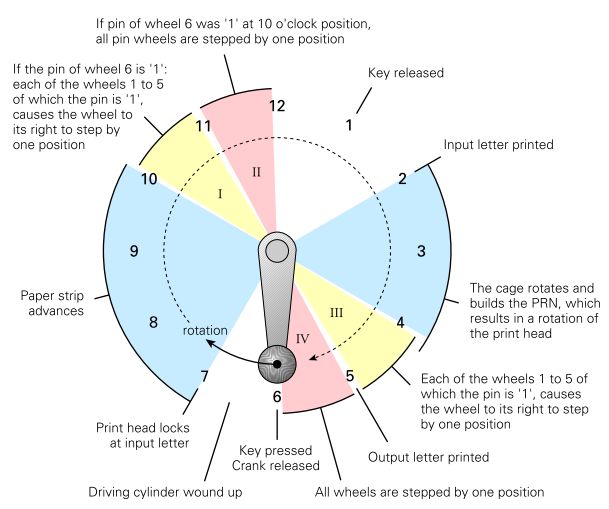
The large crank handle on the right gives the SG-41 its “Hitlermühle” (Hitler mill) nickname. Turning the crank drives a gear train that keeps all the moving parts in step: pin-wheel stepping, sensing, drum rotation, printing and paper feed. The gearing means one full turn of the crank is one complete encryption or decryption step.
The handle is locked and can’t be turned until a key is pressed. It is then released for a single 360-degree turn, after which the key is released and the lock engages again.
The handle is normally folded away and can be unfolded into its working position. It can be folded away again to make the machine smaller, ready to go back into its carrying box.
The pin-wheels
Instead of wired electrical rotors like Enigma’s, the SG-41 uses pin-wheels: discs with a number of positions round their edge, each holding a movable pin that can be set active or inactive. There are six wheels, each with a different number of positions, giving a very long combined period. The pattern of active pins across all the wheels is the core of the key: by changing which pins are set, the operator defines a new pseudo-random sequence of shifts. The wheels step in a complicated pattern, adding to the complexity.
| Position | Wheel 1 | Wheel 2 | Wheel 3 | Wheel 4 | Wheel 5 | Wheel 6 |
|---|---|---|---|---|---|---|
| 25 | Z | Z | ||||
| 24 | Y | Y | 24 | 57 | ||
| 23 | X | X | X | X | 23 | 55 |
| 22 | W | W | W | W | 22 | 52 |
| 21 | V | V | V | V | 21 | 50 |
| 20 | U | U | U | U | 20 | 47 |
| 19 | T | T | T | T | 19 | 45 |
| 18 | S | S | S | S | 18 | 42 |
| 17 | R | R | R | R | 17 | 40 |
| 16 | Q | Q | Q | Q | 16 | 37 |
| 15 | P | P | P | P | 15 | 35 |
| 14 | O | O | O | O | 14 | 32 |
| 13 | N | N | N | N | 13 | 30 |
| 12 | M | M | M | M | 12 | 27 |
| 11 | L | L | L | L | 11 | 25 |
| 10 | K | K | K | K | 10 | 22 |
| 9 | I | I | I | I | 09 | 20 |
| 8 | H | H | H | H | 08 | 17 |
| 7 | G | G | G | G | 07 | 15 |
| 6 | F | F | F | F | 06 | 12 |
| 5 | E | E | E | E | 05 | 10 |
| 4 | D | D | D | D | 04 | 07 |
| 3 | C | C | C | C | 03 | 05 |
| 2 | B | B | B | B | 02 | 02 |
| 1 | A | A | A | A | 01 | 00 |
The table shows the markings round each of the six pin-wheels, and so the number of pins on each. The first two have 25 pins, the middle two 23 and the right-hand two 24. The first four are marked with letters (J is left out, for the reason given under the keyboard above), while the last two have numbers. The fifth wheel is numbered 01 to 24, while the sixth has values from 00 to 57, in uneven steps.
The sensing levers
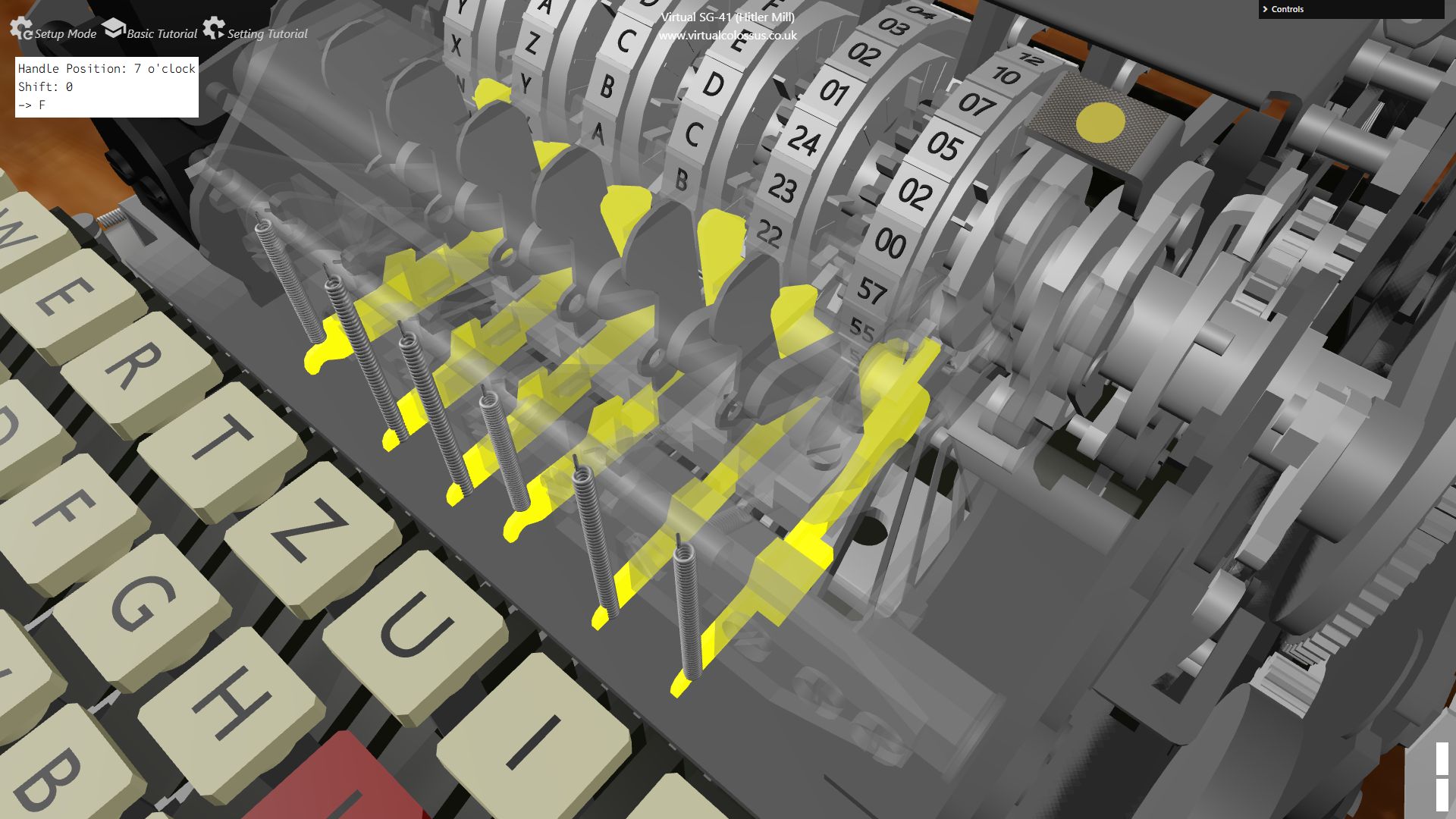
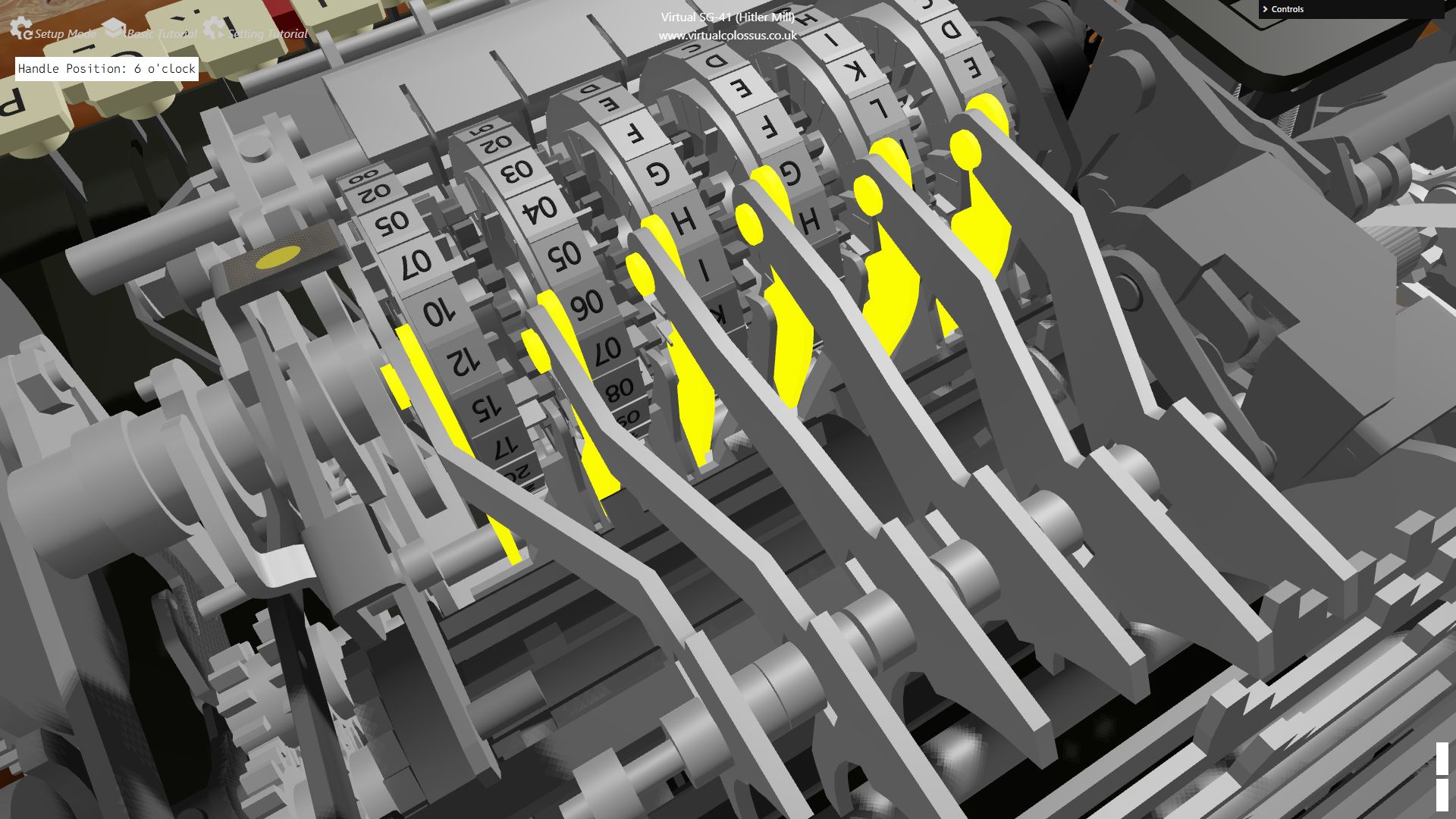
The pin-wheels are read by sensing levers at two positions, each with a different job. The first is 5 positions ahead of the letter showing in the front window, and controls the wheel stepping (if the window shows A, it reads from the letter W). The second is 8 positions back from the window, and these are used to generate the pseudo-random value from the cage, stepping the print head on to the cipher letter (for A in the window, it reads from the letter H).
Behind the pin-wheels is a bank of sensing arms, or feelers, that ride over the pins as the wheels turn. When a sensing arm meets an active pin it is pushed aside, and this is passed as a mechanical signal through a set of sickle-shaped levers to the drum or cage at the back, adding to the total shift for that step. Several sensing arms read several wheels at once, and their combined movements are added together into a net offset applied to the character being processed. This mechanical sensing replaces electrical contacts and wiring, making the SG-41 robust and less affected by damp or dirt.
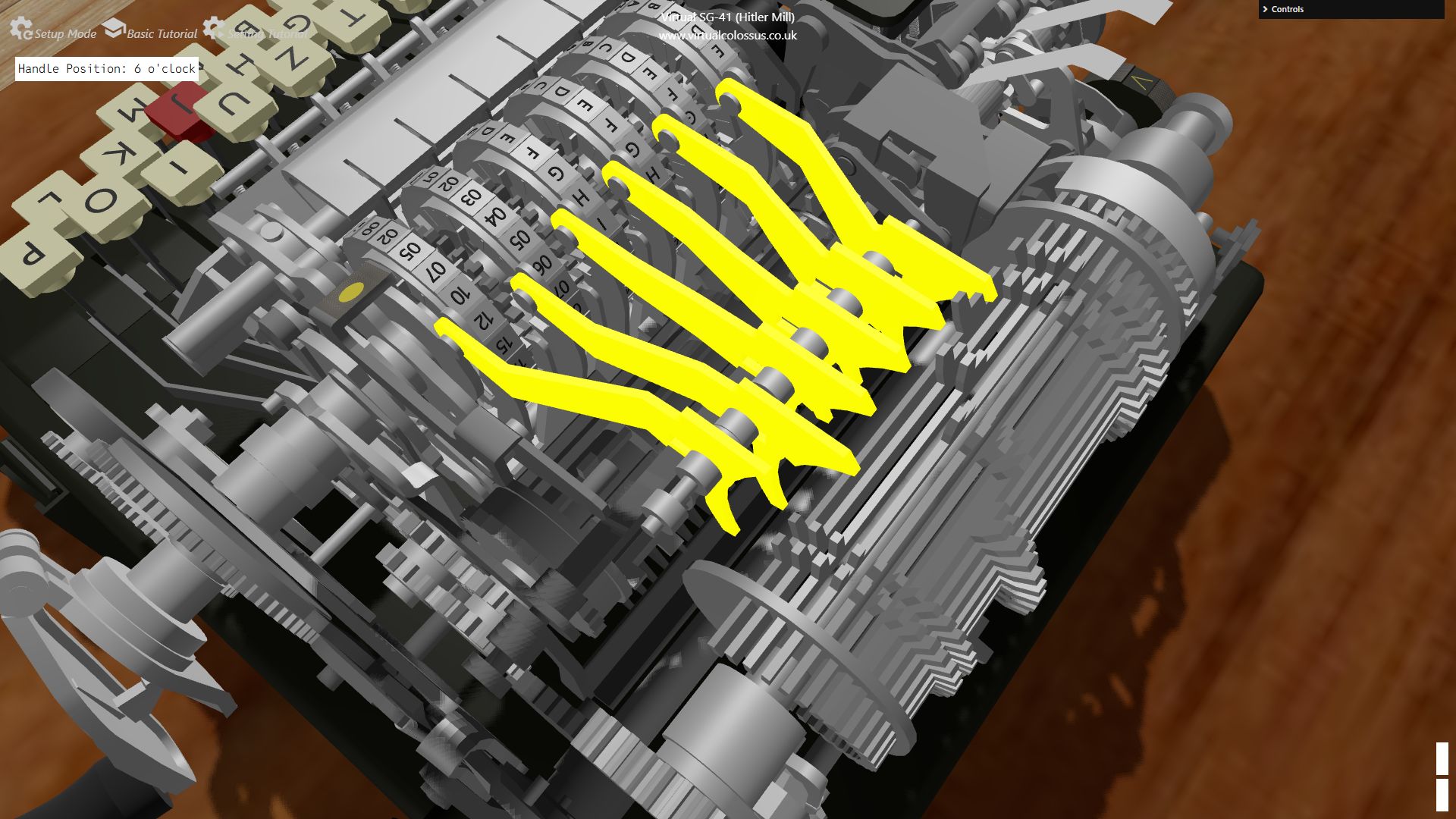
Unlike the Hagelin M-209, this doesn’t simply become an active or inactive state when the lugs on the drum are read; the actual mechanism is much more complex, as shown below.
The drum or cage
The drum, or cage, is the main pseudo-random number generator that actually enciphers the input letter. It has 25 spring-loaded bars with lugs fixed on them.
As the drum turns a full 360 degrees, the lug on each of the 25 bars meets the sickle-shaped levers, which fix the bar in one of three positions. At the end of each bar is a lug which, when in the correct centre position, acts as a tooth, turning a gear that moves the print wheel letter cylinder on one step.
The first bar on the drum has just one lug, in line with the first wheel; the next two bars have lugs in line with the second wheel. The next four bars have lugs for the third wheel, and eight bars for the fourth. The last ten bars have lugs for wheel five, making 25 in all. As the drum turns, the bars drop off a fixed, sloping edge at the left of the cage, so each bar tries to move to its spring-loaded left-hand position, catching on the active or inactive sickle-shaped levers.
The first five levers (from left to right) all work the same way, while the sixth has a special inverting feature which greatly increases the complexity of the generator, making a captured message much harder to break. The video shows how the levers, bars and lugs work together.
The printers and paper feed
The SG-41 has a dual printing unit that prints the plain text and cipher text at the same time on narrow paper tapes. Each character is printed by a pre-inked type wheel, struck through the tape by a spring-loaded hammer. A paper feed mechanism moves the tapes on one character per cycle, driven by the same crank and gear train as the rest of the machine. This removes the need to read lamps and write letters down by hand, reducing operator errors and giving a lasting record of both the original and enciphered text.
There are two sets of print wheels, one for enciphering and one for deciphering. A cam that turns with the drum first fires the plain text hammer once the selected letter is in place, then, once the cage has turned and set the enciphered letter, fires the second hammer. The plain text is always printed on the right-hand tape (looking from the front of the machine) and the cipher text on the left-hand tape, whether enciphering or deciphering.
To feed the two paper tapes, the operator has two controls: the paper advance lever and the paper release button.
The paper advance uses the pressure rollers to move both tapes on a set amount, while the paper release lifts the top rollers off the bottom ones, so the tape can simply be pulled out and torn off against the paper output glass.
The stepping mechanism
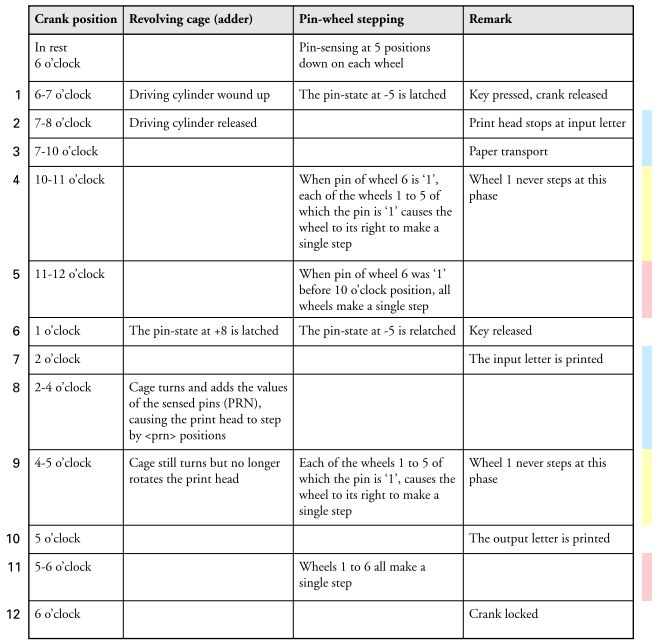
The stepping mechanism controls how and when each pin-wheel moves on. Unlike Enigma’s simple odometer-style stepping, the SG-41 uses a more complex scheme in which some wheels step depending on the state of others, giving an irregular, pseudo-random progression. There are two points in each letter’s encryption (one full turn of the handle) where the wheels can step, one before the encryption and one after. At each of these, the wheels can step between 0 and 2 steps, with always at least one step overall.
Each of wheels 2–6 has a follower on the wheel to its left, which picks up the state of its active or inactive pin and can block some of the movement; wheel 6 also has an overall blocking mechanism. The full, astounding mechanism can be seen in the videos below. This very complex stepping greatly strengthens the cipher compared with regular rotor stepping.
How the wheel stepping works:
Encryption and decryption
The SG-41 performs a polyalphabetic substitution based on the combined output of the pin-wheels. For each key press, the machine does the following:
- Step 1: the pin-wheels move on according to the first stepping rules.
- Read the pins: the sensing arms detect which pins are active.
- Work out the shift: a mechanical linkage and the lugs on the drum add these signals into a net shift value.
- Apply the shift: the plain text character (from the keyboard) is shifted within the machine’s alphabet to give the cipher text character.
- Print: both the plain text and cipher text are printed on their tapes.
- Step 2: the pin-wheels move on according to the stepping rules.
A knob on the left-hand side marked V/E (Verschlüsselung means encryption, Entschlüsselung decryption) switches to the other set of print wheels, so the same key settings and sequence can be used to decrypt: typing in the cipher text gives the original plain text on the other tape.
While the system may look at first like that of the Hagelin M-209 (see Virtual Hagelin M-209), it greatly improves on it. Rather than a simple on or off value for each lug on the bars of the cage, each lug for the first five wheels has two steps, catching on both the active and inactive levers linked to the wheel pins. The sixth wheel, if active, can also have an inverting effect, which greatly increases the complexity of the encryption.
The first wheel has a single lug, the second two, the third four, the fourth eight and the fifth ten. Each lug, if active, moves the print wheel on one step from the character entered, so up to 25 steps can be made.
The video in the drum or cage section above runs through the full encryption in detail, showing how this was done on the SG-41.
The ink cartridge
The printing system uses an ink ribbon or ink roller (often described as an ink cartridge in modern terms) to transfer ink to the paper tapes. The cartridge sits near the type wheels, so each hammer strike presses the paper against the inked surface. Over time the ink has to be replaced or re-inked to keep the printing legible. It can be replaced quite quickly in the field, much like typewriter maintenance, without disturbing the cryptographic parts.
The paper drawer
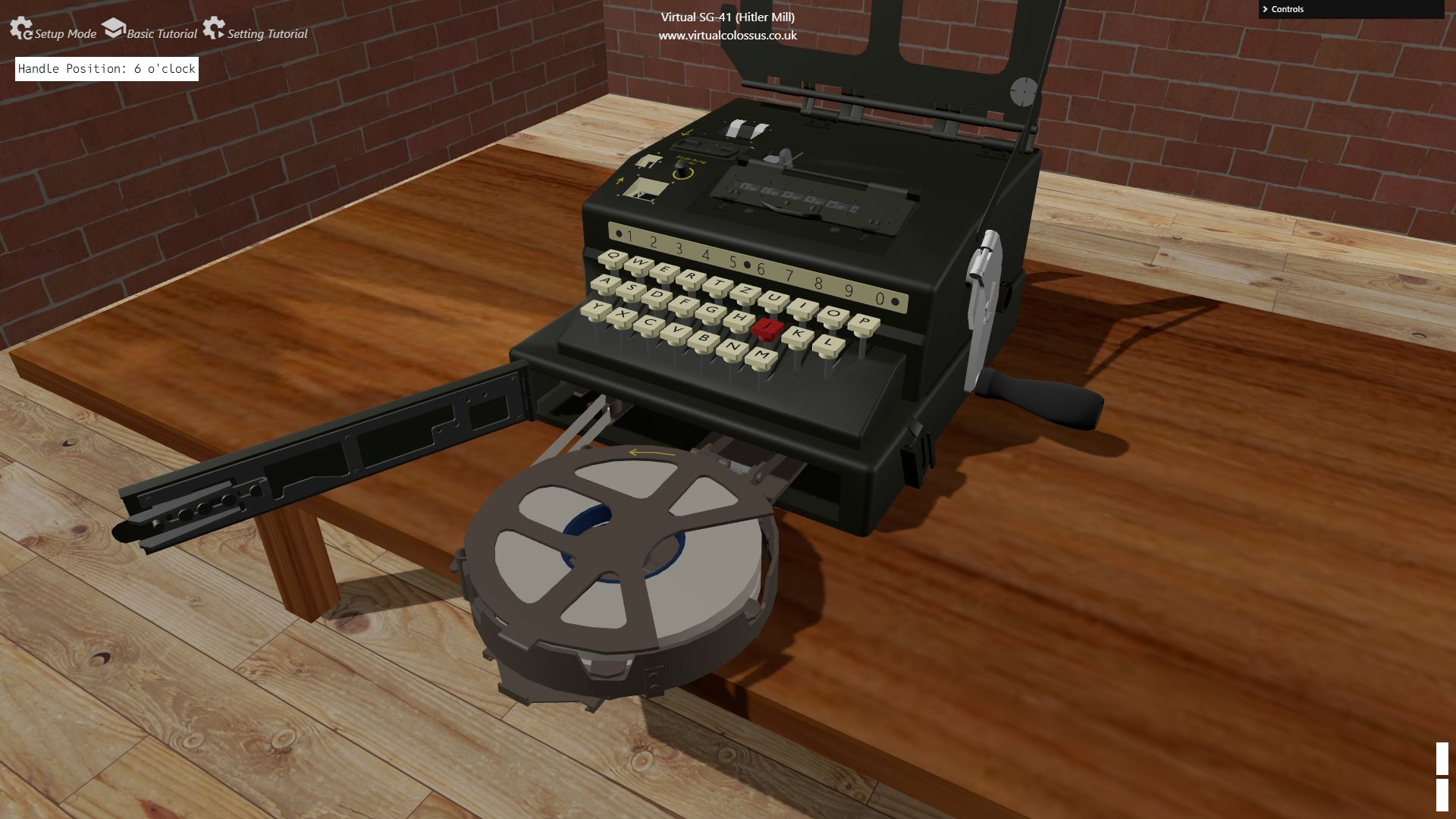
The SG-41 holds two reels of paper tape in a small compartment, or drawer, where the tapes are stored and guided into the feed path. The operator loads new reels of narrow paper tape, one on top of the other, then threads them through the guide rollers and between the printer hammers and print wheels. The drawer keeps the paper protected and tidy, while still being easy to get at for loading.
The counter
A mechanical counter keeps track of the number of characters processed, or turns of the crank. This helps operators keep an eye on message length, spot problems, and sometimes check that a key setting hasn’t been overused. The counter is driven by the same motion that moves the stepping mechanism, so each encryption or decryption step adds one to the count reliably.
A counter reset dial sets the number back to 000 before starting a new message.
The reset mechanism
The SG-41 also has a mechanism that resets all the pins to inactive. This may have been simply to clear the pins ready for setting the next internal key, or for security, so the machine could be wiped if there was a chance of capture.
First, set the F/L knob on the right-hand side of the machine from F (Funktion, the normal operating mode) to L (Löschen, delete), then hold the lever on top of the SG-41 across to the left. This pushes a set of levers against the side of the wheels, pushing the pins to the left. The F/L knob also releases the keyboard lock, so the handle can be turned without pressing a key each time. The handle is then turned 25 full turns, so every pin is reset. Finally, the F/L knob and Löschen lever are set back and the counter reset.
Next: how this simulation was made.